
What Is Armoured SWA Cable?
Armoured SWA cable stands for Steel Wire Armoured cable. It is an electrical cable with added armouring of steel wires directly beneath the outer sheath. Armoured SWA cables provide better mechanical protection to cables that are laid outdoors in ducts or where mechanical damage could be possible.
Below are parts of Armoured SWA cables and their functions:
- Inner wires: These are the insulated conducting wires within the cable, which are normally insulated with XLPE.
- Earth wire: Isolated wire used to earth the cable.
- Steel wire armour: Armouring for the cables, which provides a high degree of protection from mechanical damage and external influence.
- Outer sheath: PVC or LSZH are commonly used as they are water resistant and provide chemical and UV resistance.

Which Armoured Cable Do I Need?
Different armoured cables are suited to different environments, power requirements and installation methods. The correct cable should always be specified by a qualified electrician after assessing the route, load, protection requirements and site conditions.
Steel Wire Armoured Cable
Steel Wire Armoured cable, commonly known as SWA cable, is the most widely used armoured cable for commercial, industrial, outdoor and underground power installations. It is chosen where electrical circuits need strong mechanical protection against impact, crushing, abrasion or external damage.
Why Use Armoured Cable?
Armoured cable offers protection against extreme environments and forceful circumstances. Advantages of armoured cable include:
- Protection against mechanical damage: Steel wire armour protects the cable from shock, crushing and abrasion.
- Used outdoors and underground: Can be used in moist, chemically aggressive environments with temperature extremes.
- Extended life span: Can maintain circuit integrity longer, helping you avoid costly electrical failures.
- Regulation: A properly installed armoured cable will satisfy UK wiring regulations as well as safety standards.
Applications of Armoured SWA Cable Installation
- External electrical cable wiring, such as lighting circuits and power feeds.
- Underground applications, such as industrial power cable distribution.
- Armoured cable installation in commercial environments such as warehouses, workshops or factories.
- Where additional mechanical protection is required for electrical cables exposed to potential damage, such as high footfall areas.
Armoured Cable Sizes and Cable Length Considerations
Armoured cable comes in multiple sizes, from small to very large, depending on the required power load. Sizes regularly used are 1.5 mm², 2.5 mm², 4 mm², 6 mm², 10 mm² and 16 mm², with larger sizes available should your industrial load require it.
When working out the lengths of cable required, always allow for extra when measuring. This allows enough cable to complete your installation and manoeuvre into place to terminate your cable without being pulled or damaged.
Key Components for Armoured Cable Installation
- Armoured Cable Glands: glands designed specifically for connecting armoured cable into an enclosure. They retain the cable gland waterproof seal, as well as providing earthing continuity for the steel armour.
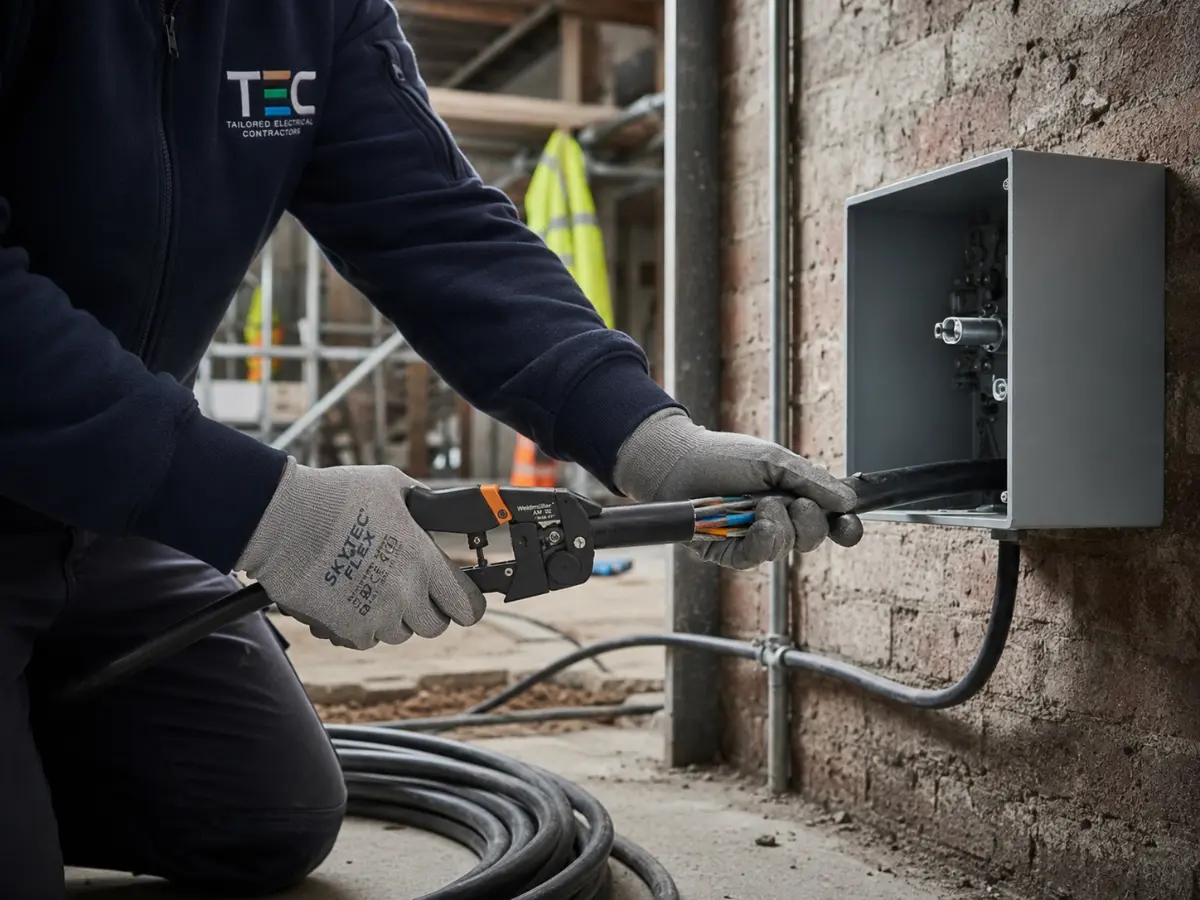
- Dedicated Cable Cutters: Side cutters with a wire guide help to cut the steel wire armour cleanly, without damaging inner wires.
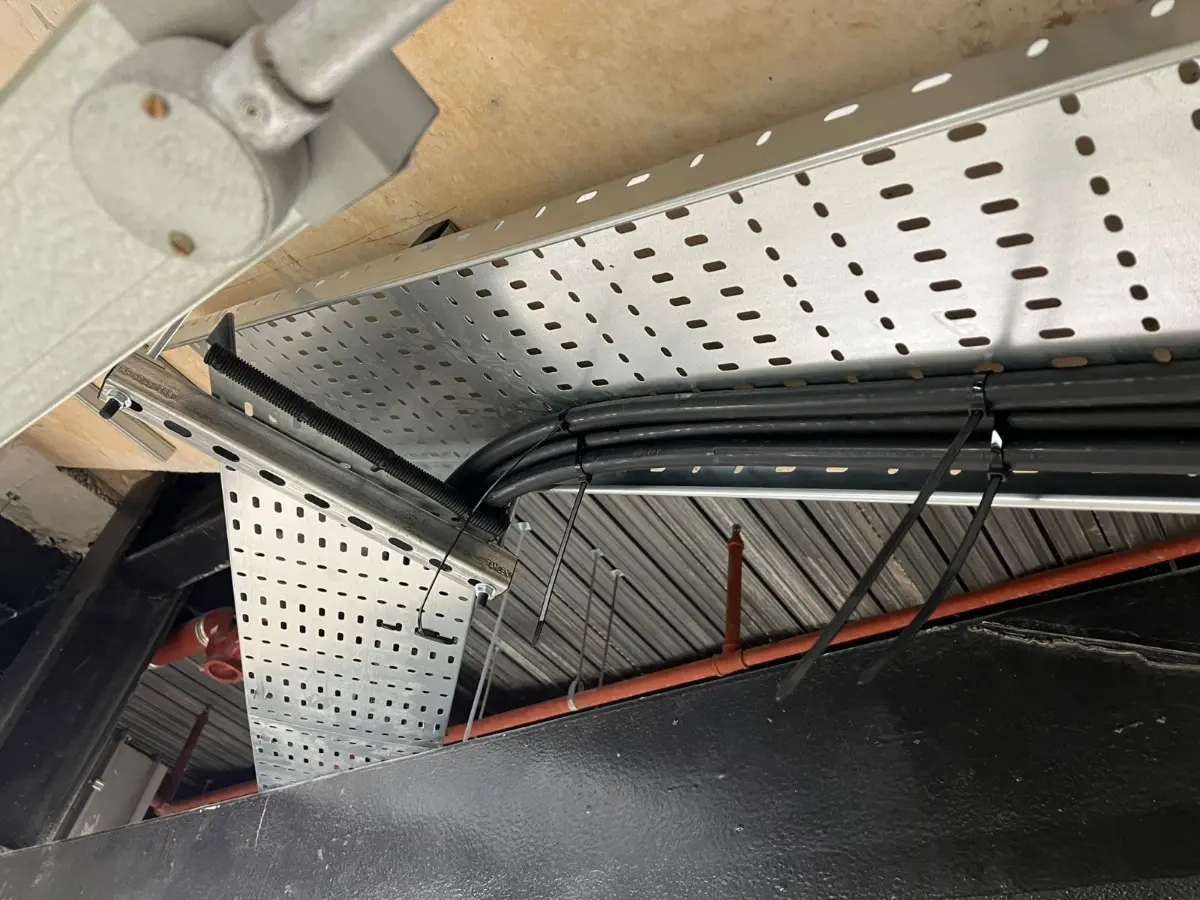
- Cable Cleats & Containment: Armoured cable requires cleating along its run to secure it in place and provide mechanical protection. Read more about Cable containment for armoured cable – Wiring Regulations compliance.
- Other Accessories: Bolts, Enclosures and Cable ties suitable for use with armoured cable.
Step-by-Step SWA Cable Installation Timeline
Armoured cable installation should be planned carefully from survey through to final testing. This timeline shows the key stages involved in a professional SWA cable installation.
Survey and Plan the Route
The installation begins with a site survey. The cable route is assessed, measurements are taken, obstacles are identified and the installation method is planned around safety, access and disruption.
01 Survey and Plan the Route
The cable route is assessed, measurements are taken, obstacles are identified and the installation method is planned around safety, access and disruption.
02 Specify the Correct Cable
The correct cable size, core count, sheath type, glands, containment and protective devices are selected based on the load, route length and installation environment.
03 Cut and Prepare the Cable
Suitable tools are used to cut and strip the cable, exposing the armour carefully without damaging the inner conductors or insulation.
04 Fit Suitable Cable Glands
Correctly sized glands are fitted to secure the cable, support mechanical strength and maintain sealing and earth continuity where applicable.
05 Install and Secure the Cable
The cable is routed along the planned route, supported with suitable cleats or clamps and protected from movement, strain and mechanical damage.
06 Terminate the Cable
The cable is terminated into suitable enclosures, sockets, isolators, distribution boards or equipment before final testing begins.
07 Test and Certify
Electrical tests are carried out before the circuit is put into service, including checks such as continuity, insulation resistance, polarity and earthing where required.
Underground Armoured Cable Installation Best Practices
The use of armoured SWA cable can be buried directly underground, provided:
- It is buried at a sufficient depth (450mm – 600mm) where there is unlikely to be any disturbance.
- It is laid on sand or fine soil, which prevents damage caused by stones or digging.
- Warning tape should be installed above the cable before backfilling.
- Cables should not be located in areas of high traffic flow unless protected by conduit or additional protection.
- Correct cable glands are used to preserve the waterproofing and earthing.
Armoured Cable Regulations in the UK
Installation of armoured cable is subject to UK safety and wiring regulations, such as:
- BS 7671 Wiring Regulations related to fixed wiring and the installation of cables
- Steel wire armour must be earthed at both ends of the run to enable ADS to occur in the event of a fault.
- Competent qualified electricians must carry out all installation/termination work as installing armoured cable is deemed Part P notifiable work.
- Armoured cable should never be bent to a radius smaller than that recommended by the manufacturer (normally between 6 and 8 times the diameter of the cable)
- All armoured cable connections should be terminated using the correct gland size.
Mechanical Protection and Safety Considerations
Steel wire armour offers mechanical strength that safeguards the internal electrical wiring from impact damage, crushing and abrasion.
Couple these with:
- Cable cleats and containment systems that offer additional security from damaging movement and strain.
- Opting for Low Smoke Zero Halogen (LSZH) armoured cables if you’re using them in enclosed public areas. They limit smoke and toxic fumes if a fire were to occur.
- Checking that the outer sheath of the armour remains intact. This prevents water ingress and harmful chemicals from damaging the inner layers.
You can use armouring in environments where cables are at risk of damage. These environments include industrial sites, outdoor applications or underground uses.
Do I Need SWA Cable?
Answer four quick questions to understand whether your installation may need armoured cable or another mechanically protected wiring method. This is a guide only and does not replace a professional site survey.
Is the cable route outdoors, underground or exposed to impact?
SWA cable is often considered where a cable route may be exposed to weather, ground conditions or mechanical damage.
Answer the questions to get guidance
Once complete, this tool will show whether SWA cable may be suitable or whether a site survey is needed to confirm the correct cable type.
UK-Wide Service
Why Choose Us
Our experienced engineers have over 20 years of industry experience, specialising in commercial and industrial electrical installations. We have vast experience with installing armoured cable, and our professional electricians will ensure that they install it safely and to British standards/wiring regulations.
We install the appropriate armoured cable glands, use dedicated cable cutters, not pipe cutters, etc. When installing armoured cable, we follow best practices.
Next Steps
Get in Touch
Safe, long-lasting and sturdy armoured cabling. Get in touch today for the installation of armoured cable inside a warehouse, workshop feed or even outside for external electrical projects. We will manage your project thoroughly and provide a professional service with as little disruption to your day-to-day business as possible.
Common Armoured Cable FAQs
Answers to common questions about SWA cable installation, UK wiring rules, buried cable routes, earthing, cable sizing and professional installation.
Armoured cable should be designed, installed and tested in line with BS 7671 Wiring Regulations. The installation should consider mechanical protection, cable route, earthing, gland selection, containment, protective devices and final testing before the circuit is put into service.
Armoured cable installation is best carried out by a qualified electrician. SWA cable must be correctly sized, glanded, earthed, terminated and tested. In domestic settings, some electrical work may also be notifiable under Part P of the Building Regulations, depending on the type and location of the work.
No. SWA cable does not always need to be buried underground. It can be used above ground, outdoors, in commercial buildings, industrial areas and other locations where extra mechanical protection is required, provided the cable and installation method are suitable for the environment.
There is no single depth that applies to every installation. Many buried SWA cable routes are installed at depths around 450 mm to 600 mm, depending on the site, route, risk of disturbance and design requirements. Ground conditions, warning tape, bedding and additional protection should also be considered.
Yes, the steel wire armour normally needs to be correctly earthed as part of the protective arrangement. The exact earthing method depends on the electrical design, cable type, installation and protective devices. A qualified electrician should confirm the correct approach.
Yes, SWA cable is commonly used for outdoor electrical supplies when it has been correctly specified and installed. Outdoor installations need suitable cable, glands, enclosures, sealing, support, earthing and testing to protect against weather, moisture and mechanical damage.
The correct SWA cable size depends on the load, route length, voltage drop, installation method, protective device, ambient conditions and earthing requirements. A qualified electrician should calculate the correct size rather than choosing a cable based on guesswork.
ARMOURED CABLE INSTALLATION AVAILABLE THROUGHOUT THE UK
- Avon
- Bedfordshire
- Berkshire
- Buckinghamshire
- Cambridgeshire
- Cheshire
- Cornwall
- Cumbria
- Derbyshire
- Devon
- Dorset
- Durham
- Essex
- Gloucestershire
- Greater London
- Hampshire
- Herefordshire
- Hertfordshire
- Isle of Wight
- Kent
- Lancashire
- Leicestershire
- Lincolnshire
- Merseyside
- Norfolk
- Northamptonshire
- Northumberland
- Nottinghamshire
- Oxfordshire
- Rutland
- Schools
- Shropshire
- Somerset
- Staffordshire
- Suffolk
- Surrey
- Sussex
- Tyne and Wear
- Warwickshire
- West Midlands
- Wiltshire
- Worcestershire
- Yorkshire