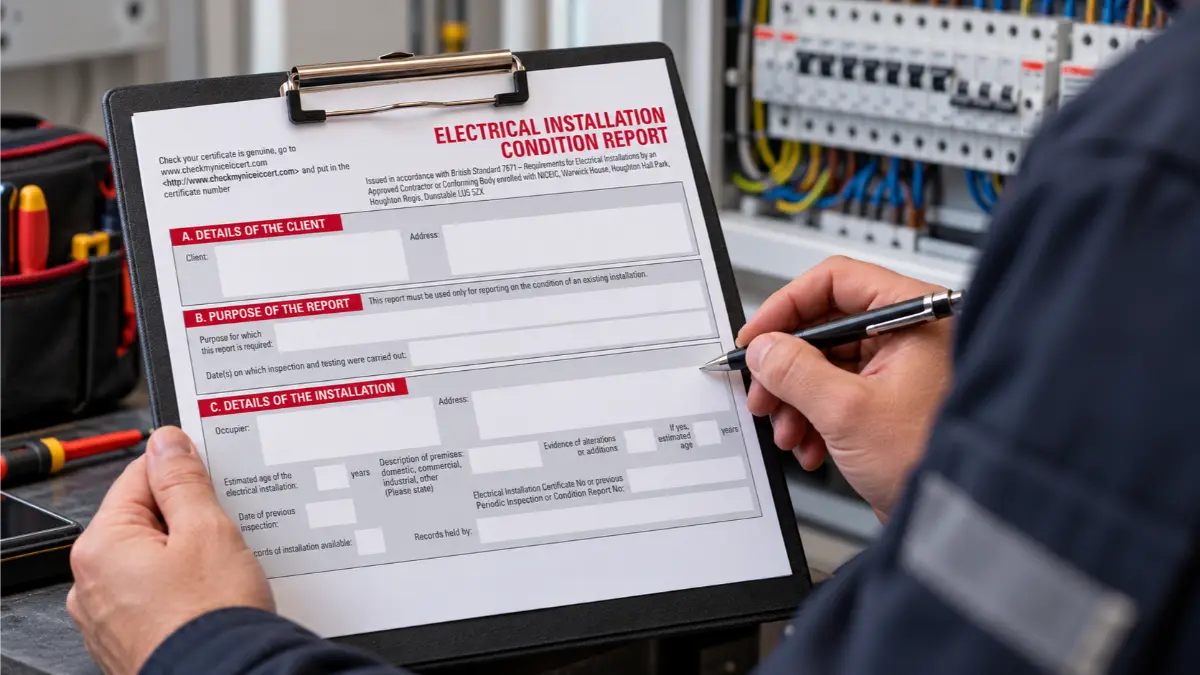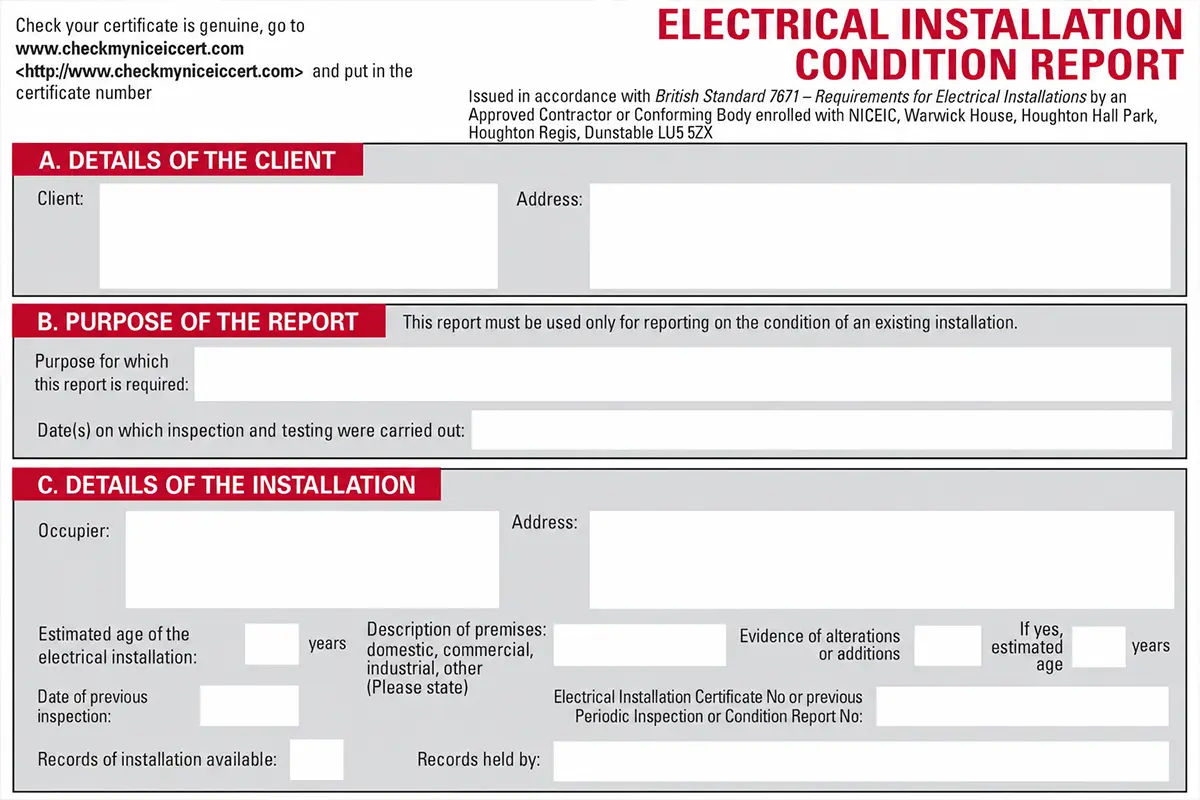
An Electrical Installation Condition Report (EICR) records the condition of a building’s fixed electrical installation on the day it is inspected. If the report includes codes such as C1, C2, C3 or FI, those classifications explain the significance of the observations and what should happen next.
For property managers, landlords and facilities teams, the key point is simple: C1, C2 and unresolved FI findings make an EICR unsatisfactory. C3 findings alone do not. The report should explain each observation so you can discuss the right next steps with the inspector.
EICR codes at a glance
| Code | Meaning | What it indicates | Effect on the report |
|---|---|---|---|
| C1 | Danger present | A person is at immediate risk | Unsatisfactory |
| C2 | Potentially dangerous | A defect could become dangerous in foreseeable circumstances | Unsatisfactory |
| C3 | Improvement recommended | An improvement is advisable, but this code alone does not identify danger | Satisfactory if there are no C1, C2 or FI findings |
| FI | Further investigation required | More investigation is needed to determine whether a dangerous condition exists | Unsatisfactory until investigated |
The inspector assigns a code to an observation based on the installation and the conditions found. It should not be treated as a generic label for a particular component.
What does an EICR cover?
An EICR assesses the safety of the fixed electrical installation. Depending on the property, this can include distribution boards or consumer units, fixed wiring, socket outlets, lighting circuits, earthing and bonding, and other parts of the installation.
An EICR is different from portable appliance testing (PAT). PAT relates to portable electrical equipment; an EICR concerns the fixed installation. The report is based on inspection and electrical testing, and it records any limitations that affected what could be checked. For service details, read TEC’s nationwide EICR testing and condition reports.
The inspector records observations and assigns codes where appropriate. An older installation is not automatically unsafe because it does not match every recommendation in the latest edition of an electrical standard. The condition, design, use and risks of the installation all matter.
C1: Danger present
C1 means danger is present. The observation indicates that someone could be exposed to immediate danger, such as electric shock or fire, in the circumstances described by the inspector.
The immediate priority is to make the affected part safe. Depending on the finding, that may involve isolating equipment or a circuit, restricting access, or arranging urgent remedial work. The report should explain the concern and the action taken or recommended.
An example might be accessible live parts that could be touched. The correct classification depends on the actual circumstances, so examples should not be used to assign a code to a different installation without an inspection.
A C1 finding makes the EICR unsatisfactory. Contact the inspector or a qualified electrical contractor promptly to understand what has been made safe and what work remains.
C2: Potentially dangerous
C2 means potentially dangerous. The defect may not present immediate danger in the conditions observed, but it could create danger if a foreseeable fault or other circumstance occurs.
The report should set out the observation and recommend urgent remedial action. Discuss the priority and any temporary precautions with the inspector, particularly where the affected circuit or equipment is in regular use.
A C2 finding also makes the EICR unsatisfactory. The code does not, by itself, give every property the same legal deadline for work. Consider applicable statutory requirements, the report’s recommendations and the circumstances of the building.
C3: Improvement recommended
C3 means improvement recommended. It identifies an improvement that the inspector considers advisable. A C3 code alone does not make an EICR unsatisfactory.
C3 is not a finding of immediate danger or potential danger. It may relate to an improvement that would bring an installation more closely in line with current recommendations, or otherwise improve it. Whether and when to complete the work should be considered in context.
If a report contains C3 observations alongside C1, C2 or FI findings, address the higher-risk observations first. Property managers can then consider whether planned C3 work should be grouped with other maintenance or upgrade work.
FI: Further investigation required
FI means further investigation is required. The inspector has identified something that could not be properly assessed during the inspection and needs more information before deciding whether a safety issue exists.
The report should explain why further investigation is needed and what needs to be checked. This may involve additional testing, tracing a circuit, arranging access to an area or investigating a part of the installation that could not be inspected fully.
An unresolved FI finding makes the EICR unsatisfactory. Once the additional investigation is complete, document the findings and agree any necessary remedial action. FI should not be treated as a final diagnosis of a particular fault.
What happens after an unsatisfactory EICR?
Start by reviewing the observations with the person who carried out the inspection. Ask them to explain:
- Which findings are C1, C2 or FI, and why
- What immediate precautions are recommended
- What further investigation or remedial work is needed
- Which work is urgent and which can be planned
- What inspection, testing or certification will document the completed work
A written quotation should describe the work it covers and relate it to the observations in the report. This helps you compare proposals and maintain a clear record of what has been addressed.
A remedial job does not automatically mean that a new full EICR is required. The appropriate verification and paperwork depend on the work and the original findings. Ask the contractor to explain how completion will be checked and recorded. Keep the original report with the relevant follow-up records.
How property managers can prioritise EICR remedial work
For a building or portfolio, a practical response is to separate findings by urgency and coordinate access before work starts.
- Deal with immediate danger. Discuss C1 observations with the inspector and establish what has been made safe and what remains outstanding.
- Plan urgent work. Agree the scope and timing for C2 findings, taking account of affected areas, equipment and the people who use them.
- Resolve FI observations. Arrange the investigation and any access or shutdown needed to reach a conclusion.
- Schedule improvements. Review C3 recommendations as part of planned maintenance or upgrade work.
- Keep the records together. Retain the EICR, quotations, completed-work records and any further inspection or testing documents.
For occupied premises, early coordination with tenants, staff or site teams can help reduce disruption. For multiple sites, a consistent record of observations, actions and follow-up dates makes it easier to see what remains open.
EICR requirements depend on the property and location
EICR codes explain technical observations; they do not, on their own, describe every legal duty that may apply to a property. Requirements can depend on the property’s use, the type of tenancy, the responsible person and the UK nation in which it is located.
England’s private rented sector has specific electrical safety requirements for landlords in scope. For further details, see the government guidance on electrical safety standards in rented properties. Other situations and the devolved nations may follow different requirements. Commercial property owners and employers also need to consider the duties and risk controls that apply to their premises.
Do not assume that one inspection interval or remedial deadline applies to every home, rented property and commercial building. Check the current requirements for the property and take advice from a competent electrical professional where needed.
Frequently asked questions about EICR codes
Open a question to read the answer.
Does a C3 code fail an EICR?
No. C3 means improvement recommended. C3 findings alone do not make an EICR unsatisfactory. C1, C2 or unresolved FI findings do.
What is the difference between C1 and C2?
C1 means danger is present and immediate action may be needed to make the affected part safe. C2 means a defect is potentially dangerous and urgent remedial action is recommended. Both make the EICR unsatisfactory.
Does an FI code mean the installation definitely has a fault?
Not necessarily. FI means further investigation is needed to establish whether a dangerous condition exists. Until the investigation is completed and documented, the EICR remains unsatisfactory.
Do I always need a new EICR after remedial work?
Not automatically. The follow-up inspection, testing and documentation depend on the original observations and the work carried out. Ask the contractor what evidence is needed to record the work and resolve the findings.
Who can explain or review a code?
Start with the person who carried out the inspection and ask them to explain the observation and classification. If you still have concerns, seek a second opinion from another competent electrical professional.
Get clear advice on your EICR
An unsatisfactory EICR is a record of findings that need attention and a practical starting point for deciding what to do next. Understanding the codes helps you separate immediate risks, urgent remedial work, further investigation and planned improvements.
TEC Electrical Contractors supports businesses and property managers with EICR inspections and electrical remedial work. If you already have a report and need to discuss its findings, contact TEC to talk through the next steps.